
You’re doing your exercises and attending appointments but how do you know whether your ACL rehabilitation is actually working?
Being further along in the calendar doesn’t tell you everything. After an ACL injury or ACL reconstruction, you need to understand what is changing in your knee and what you’re working towards.
At Specialist Sports Therapy, I help patients make their progress visible through measurements, strength testing and clear rehabilitation goals.
Look beyond the weeks since ACL surgery
Knowing that you’re three or six months after surgery is useful context. It doesn’t tell you how strong your leg is, whether your knee is still swollen or how well you tolerate exercise.
Your ACL recovery should include regular checks of:
- Knee swelling: how it changes and how your knee responds to activity.
- Range of movement: your ability to straighten and bend your knee, compared with your other side.
- Strength: measured changes in the muscles supporting your knee.
- Movement: how you walk, squat and perform the tasks appropriate to your rehabilitation stage.
- Confidence and function: what you can do comfortably in everyday life and during exercise.
These measures help build a clearer picture than time alone.
Track changes consistently
It’s difficult to spot a trend when you’re relying on memory.
Record measurements using the same method and under similar conditions. Keep a log of your exercises, weights and repetitions, alongside how your knee responds.
One measurement only shows one moment. A series of measurements can help you and your rehabilitation professional see whether things are improving, staying the same or needing further attention.
Know what you’re aiming towards
“I want to get back to sport” is a goal. You also need to understand the steps towards it.
Ask your rehabilitation professional:
What am I working on now? How are we measuring it? What do I need to achieve before progressing?
Returning to running or sport should involve an assessment of your readiness. Completing a certain number of weeks after ACL surgery is only part of that decision.
What if your ACL recovery has stalled?
If your knee remains swollen, you’re struggling to regain movement or you’re not getting stronger, ask for a review of your rehabilitation.
Persistent symptoms deserve attention. Tracking them can make that conversation more useful, but measurements alone cannot explain every problem—you may need an examination.
Make your ACL rehabilitation progress visible
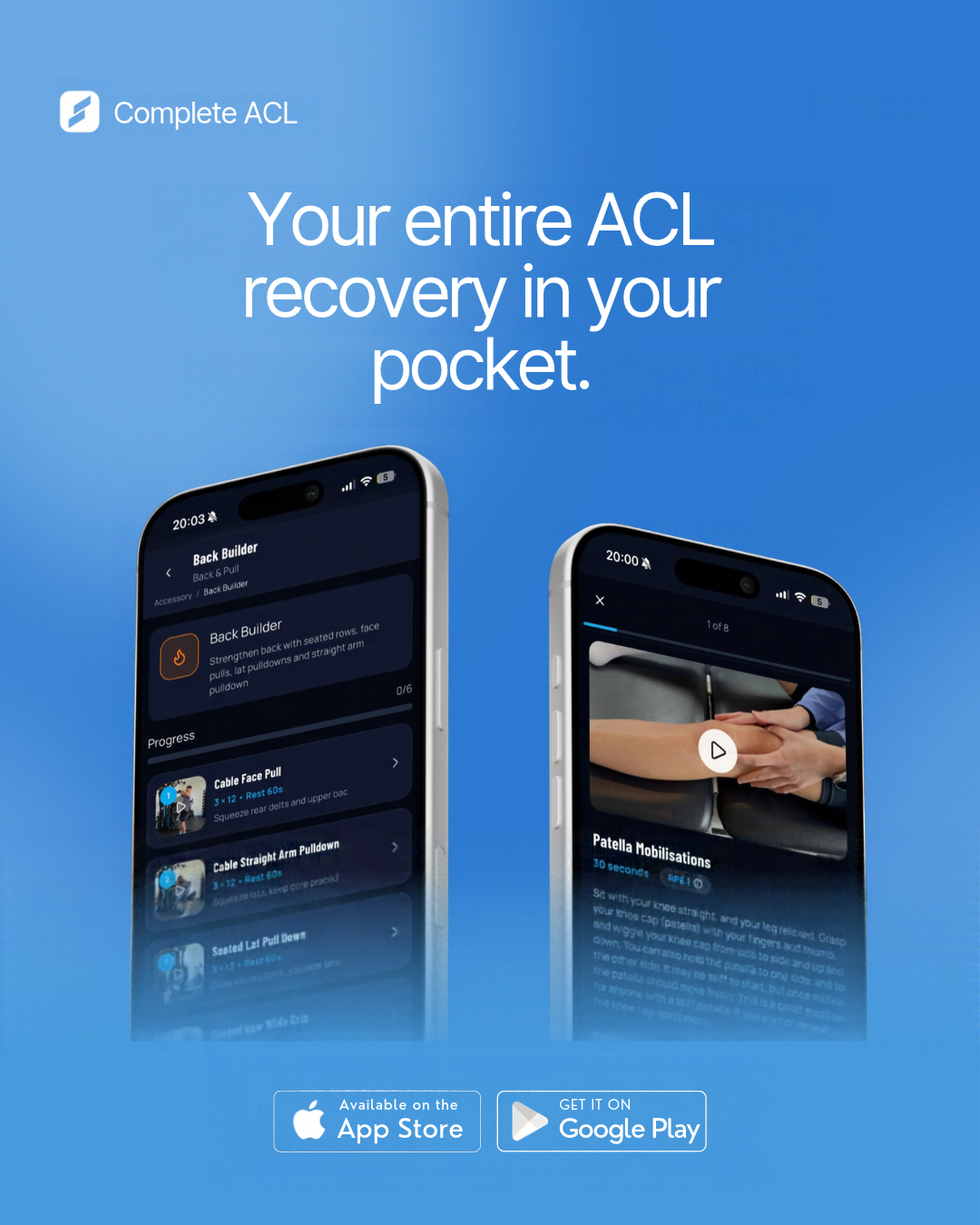
This is one of the reasons I created Complete ACL: to bring rehabilitation programmes, exercise logging, education and progress tracking together.
The ACL rehabilitation app is designed to help you see changes in your recovery and understand what you’re working towards, alongside guidance from your rehabilitation professional.
Explore Complete ACL and get the latest app updates